Featured

Life in Photography

Art photography is more than just snapping a photo, blowing it up and putting in on your wall as art. Although you can create some fantastic photos that you can display as art, learning a few tricks to enhance the pictures can make all the difference.

Take a simple picture of a tomato, for example. You can find many designer rooms complete with pictures of food items that look great. But if you look closely, you can notice that it is not just a simple picture of a red tomato that is hanging on the wall integrated into the decorating scheme. There is a certain element of artistic merit in the photograph.

The photo in the stylized room that you love looking at is not just a photograph of a simple tomato that someone shot at random. A lot of thought and artistic value went into that picture. Do you see the droplets of moisture on the bright red skin of the tomato? Those droplets make the tomato seem juicy. You can almost taste the cool, flavorful tomato just by looking at the picture.

And the tomato in the picture is not just dead-centre either. It is probably a picture of part of a tomato-maybe just the top part or a quarter of it. The tomato has become the subject of the picture that has a certain shape, leaving some of the picture up to your imagination. The space around the tomato also makes up empty space which makes you focus on the subject (the tomato).

Pay attention to the colors in the photograph as well. Isn’t that tomato a bright, bright red? Is it set against a contrasting background to make it show up its redness and juiciness even more? Is the background plain, or does it have a pattern that contrasts against the tomato’s one-tone red color? All of these artistic elements can be used to enhance the photo.

Another approach to your tomato picture might be to take a group photo of several tomatoes together. Again, you can place them against a contrasting background to show them off, or against a white background to help you focus more on the tomatoes themselves.

You could also place the tomato or tomatoes in an attractive dish that might add to the artistic effect of the photograph. The dish would become another element of your photo design.

Although the above is talking about a simple picture of a tomato that can be used as photographic art, the same ideas can be applied to any still life photograph you may choose to use as art. Use the object to take advantage of its best feature (in the above case, the juiciness of the tomato and its bright red color) and use color enhancement techniques for contrasting elements. Position the objects to use the positive and negative space as part of the artwork.

Experiment and play with the objects until you give your photograph the ‘right’ touch. Photographs can be simply photographs, but you can make those photographs into art that you will be proud to display.
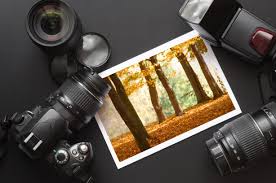
asdasdasda

How to Upgrade your Photography Skills

Photography is a wonderful form of expression that can take years of practice, incredible patience and a dedication to continual improvement if you truly want to master it. This can seem overwhelming to the new photographer, however there is no reason for alarm. Many of the more technical aspects of photography can be picked up simply by shooting lots of photographs; if you enjoy photography this won’t be a hard goal to meet. In the interest of making things a little easier, here are five ways to make your next photograph the best one yet:

Go Vertical

This is one of the easiest changes to implement in your daily shoots. Most photographers forget about the simple technique to turn your camera vertical (instead of horizontal) and miss the opportunity to better compose their subject. Think about your framing before you shoot and if a horizontal shot doesn’t seem quite right, it’s time to go sideways.

Change Your Perspective

Changing your perspective is another habit you should focus on in your daily shooting. Taking pictures head on (immediately in front of your subjects) is a common approach so look for other ways to take the image. For instance, try shooting a portrait of a friend while you kneel or lie on the ground – this photo will be far more compelling than the normal straight shot.

Don’t Fight the Light

When broken down to its core elements, photography is merely light and the way it interacts with objects. Learning how to use light is an important part of photography so play around with different types of light and see what happens. Always be willing to move around so you can get the best possible light and make sure to know the optimal range of your flash so you can use it properly. Try to think outside of the box when it comes to lighting and try backlighting subjects in different ways so you can see what kind of impact this has on your images.

Crop In-Camera

This one is more difficult to get used to, but it is critical that you frame your images correctly. Try and compose your photographs so that only the parts of the story you want to tell are visible in the frame, and leave the rest out. If you’re having difficulty with finding the perfect setup, try changing your distance to the subject and if all else fails remember that you can always go vertical. Although this is easy to fix using photo editing software, it is always best to try to crop your photo using your camera.

Get an SLR

Sure, upgrading your camera is an obvious solution to taking better photographs. But the reason for upgrading to a SLR (single lens reflex) is to give yourself the ability to manually adjust your aperture, focus and exposure so you can improve the quality of your pictures. And unlike many small digital cameras, with an SLR, what you see through the viewfinder is exactly what you get. Finally, SLR cameras will provide you with tons of flexibility in accessories such as additional lenses and filters. You may not need these things now, but they’ll come in handy when you’re ready to use them.

As with any skill, the best way to improve your photographs is by practicing as much as you can. And don’t forget about taking time to look at other photographer’s work and reading up on different techniques as these will help take your photographs from “okay” to “incredible.” All you have to do is get out there and start shooting!

MORE TIPS JUST CLICK BELOW.

download4

download3

Design a site like this with WordPress.com
Get started